
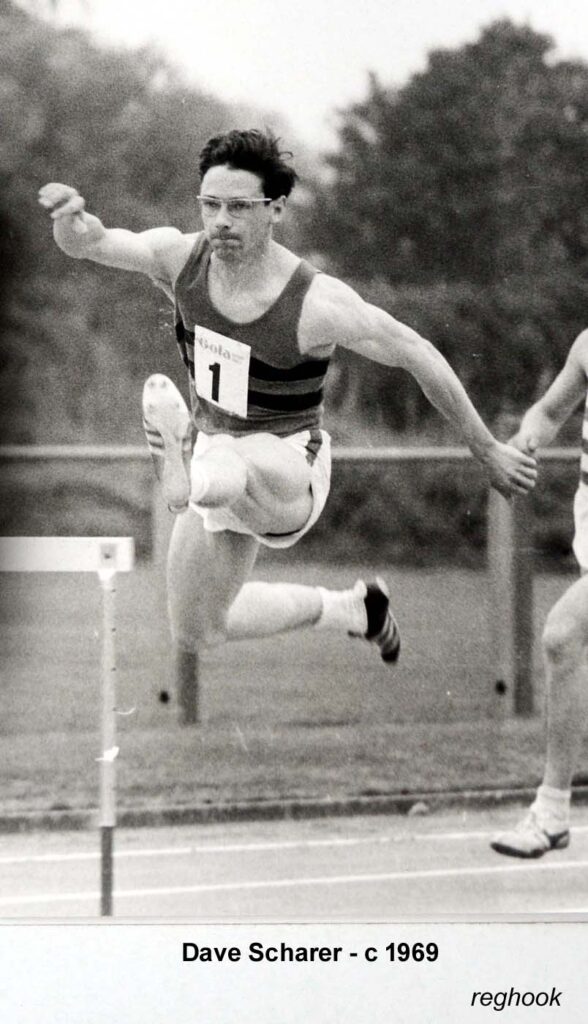
Born on the 15th of October 1942, David Henry Scharer remains one of the forgotten men of Sussex athletics despite notching up ten international appearances between the five years from 1966 and 1971, including two major Games, and being one of the most versatile and prolific Sussex athletes.
Scharer was a Varndean Grammar schoolboy, and Varndean has now supplied no less than seven athletes in these Top Sussex profiles. He came into the sport as a high jumper and had considerable success, despite being at 5’ 7” on the short side, in inter-Schools and Inter-club competitions. Despite his lack of inches, he took on the much taller athletes in one lap hurdles and beat most of them.
He first caught the eye at the Sussex Schools championships in 1960 when he won the Sussex Schools Senior 100 yards title in 10.5s. From former English Schools Intermediate champion and Brighton club mate to be Rick Seeley in 10.5sec. He repeated this time at England Schools but did not reach the final, Chris Carter was also in the Sussex team that year, and he was to finish fifth in the senior 800m, having placed third in the Intermediate race the year before. This heralded the Golden years of Sussex athletics, and later they were to clash in County and Club championships and frequently join in the inaugural Division one of the British Athletics League in 1969.
In September 1961, David was off to Oxford University, where his natural talent was developed.
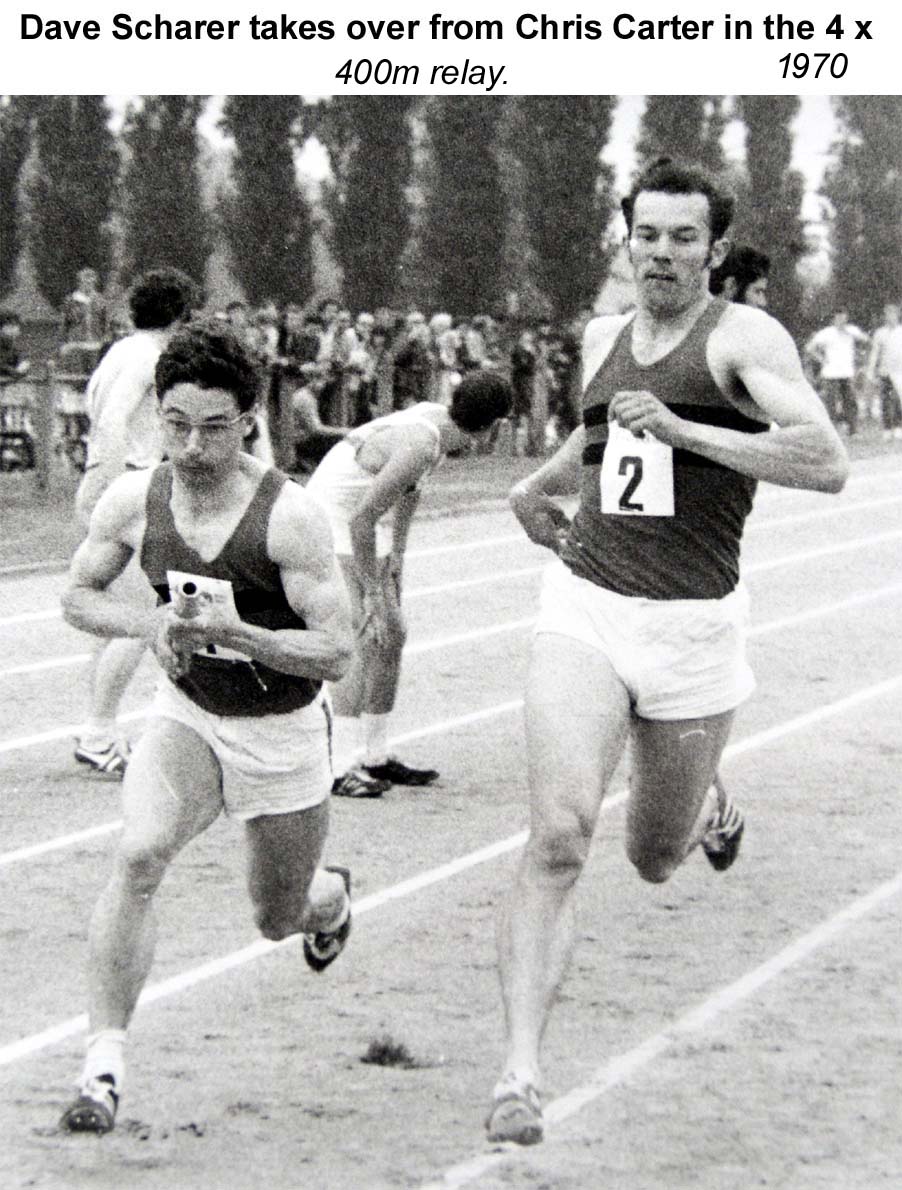
Dave was a godsend to any team manager. This unassuming and modest athlete was always willing to fill in at times of need at Brighton Club, Sussex County and even International matches. In addition, he was to compete in many British League matches, with considerable success in both the 440y Hurdles and quarter-mile flat and both relay teams at most matches. This was when the top athletes would support their Clubs in Leagues competition, particularly in quality British League matches, so there were no easy races.
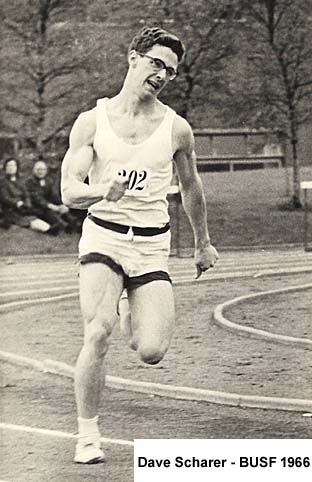 Standing at just 5ft 7in, he decided high jumping was not the event for him, and he turned his attention to sprinting and particularly one-lap events and even more so when it involved hurdles.
In 1963, he was involved in his first Sussex Record when he was part of the winning Brighton sprint relay team when they clocked 43.7s, and this was after he had won the high jump at 5’ 6” (1.67m) and finished second in the 120y hurdles in 16.7s, which was quite an effort given his height.
University competition would start in November and go through until April/May when Club and International athletic would just be getting underway.
The l964 SCAAA indoor championships at Stanmore were an unofficial Brighton Club championship as John Knowles won the 60y title in 6.6s from Dave 6.8s and Rick Seeley took third place.
In early May, competing for Oxford and the annual match again a select A.A.A team, he made his 440y Hurdles debut and although squeezed into fourth place, he clocked an impressive time of 55.7s.
He helped improve the Sussex sprint relay Record winning the Southern title in 42.4 with Rick Seeley, John Knowles and Derek Young, and they made further inroads when taking second place in the A.A.A championships in 42.1s.
In September of that year, he finished second to club mate John Harmes, who was also the British Junior 440y Hurdles record holder, in 54.3s in 1963, in the Sussex Decathlon championship.
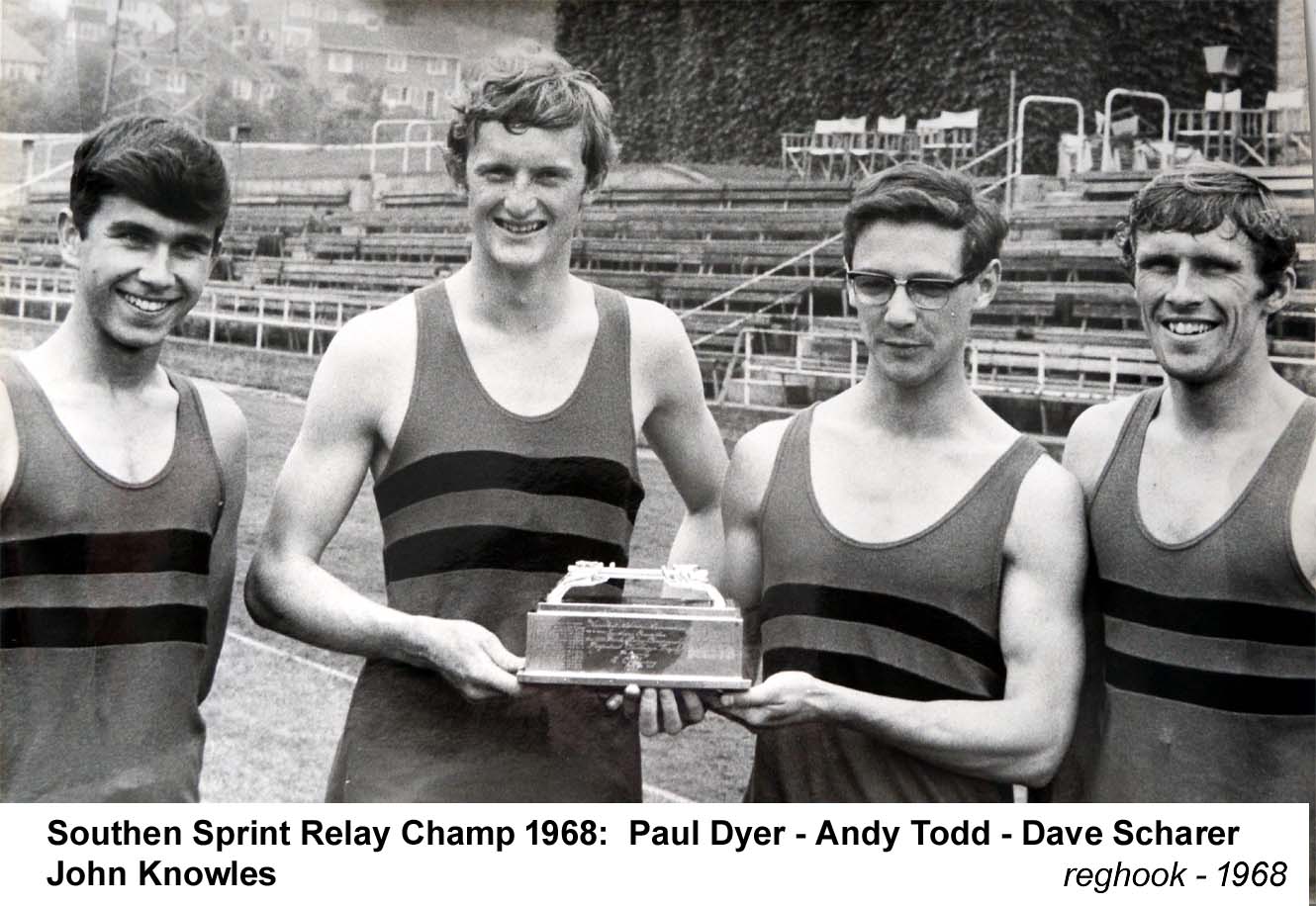 He continued to make significant strides in 1965, placing second in the Trials for the Oxford team in 54.9s. Then placing second in the Inter-varsity 440y hurdles in 55.2s and then again second in the BUSF champs at Liverpool in 53.2s a performance that ranked him eighth on the British Lists for 1965. An ankle injury ruled out most of his season, but he was part of the Oxford and Cambridge teams that travelled to America for a match with the renowned Harvard and Yale University teams, and although not really fully fit, he placed third in 56.8s.
He was unbeaten in the 440y hurdles up to Whitsun in 1966 when he was third in the Inter-Counties at White City in 53.7s but won the BUSF title in 53.4s. And in the AAA championships, he finished third in his heat behind the, to be, Olympic medallists John Sherwood and David Hemery in his heat and did not reach the final though he would have done had he been in any of the other heats.
Running for the BUSF team against the AAAs, he was third behind Sherwood in 52.6s. A time that lifted him to sixth place on the British list at the end of the season.
He also won an AAA silver medal in the 4 x 440y relay for Brighton with Ian Wilson, John Harmes and the up and coming Andy Todd who succeeded Dave as the Club and Sussex champion and record holder. In September, he defeated reigning champion John Harmes for the Sussex Decathlon title with 5930 points on the then scoring tables.
This year the first day was held on grass at Bognor, while the second day’s competition was held at Withdean.
In the mid-sixties, it was usual for many athletes to start competing in April and go right through until October with competitions most weekends and sometimes the odd mid-week match thrown in.
 In early September, Dave had to withdraw from the G.B. match against Sweden but had recovered by the end of September; he then finished third in a small AAA team, who met France in an “Open meeting at Rouen, where he clocked 53.0s.
Back to Oxford and on the first weekend of October, he ran his fastest Half-mile in 1:55.2s for the Oxford Seniors against the Freshers match.
It was a low-key start to 1967 as he was not eligible for the Inter-varsity match. Still, he took second place in the BUSF 440y hurdles championships at Motspur Park in 53.8s and repeated this placing when representing the BUSF in their match against the AAAs at Portsmouth in 53.8s in August.
He collected another AAA relay bronze with Iain Wilson, Jim Barrs and Chris Carter in the 4 x 440y relay and in September, he retained his Sussex decathlon title at Withdean with 5507 points.
He completed another April to November season, winning both the 220 and 440y hurdles in the Oxford Seniors versus Freshers match on the first weekend of November.
In 1968, David had left Oxford University behind him and was working for Shell Chemicals. His first major victory of the year came in the London Business House Championship, which was a major event in those days, at Motspur Park in June, when he clocked 49.9sec for the 440y title. A few days later, he won the Sussex 440y Hurdles title at Withdean in a leisurely, for him, time of 55.6s.
After missing a place in the final of 440y hurdles at the AAA championships, he had a busy July. In mainly domestic competitions, he notched up four victories including two relays, in the Langmaid Trophy meeting at Withdean. There were three more victories in the Arena trophy match the following weekend but was beaten into second place, despite clocking 48.8sec, in the 440 yards Brighton club championships behind Chris Carter, who clocked 48.7s.
There was another second in the City Charites meeting at Motspur Park in 53.9s behind clubmate Andy Todd, who clocked 51.2s and in an invitation 440y hurdles at the National Police championships at Withdean there was a repeat result with Todd clocking 52.1s to Dave’s 54.0s.
In September, there was an AAA Gold medal for the One-mile medley relay at the Perry Barr track in Birmingham, with Rick Seeley and John Knowles running the 220yds legs, Dave the 440yds and Jim Paterson the Half-mile.
 There was a fourth place in 48.6s in the 400m flat at the 1969 Inter-County championships at the Crystal Palace, as Andy Todd was selected for the Hurdles. While the following weekend in the 400m flat at the Sussex championships Dave met international one lapper Martin Bilham and missed the title by one-tenth of a second in 48.2.
There was a one/two for Andy Todd and Dave in the Southern Championships 400m hurdles at Crystal Palace in July with clockings of 51.8s. and 53.2s respectively, and then a double Pb for Dave in the AAA Champs at the White City with second place in the heat in 52.2s. and fourth place in the final in 52.0s.
There was another 4 x 400m silver medal in the AAA for Brighton at the White City in August in 3:15.1s and in September a third place in the Coco Cola Invitation meeting at the Crystal Palace in 52.0s behind Olympic bronze medallist John Sherwood who clocked 50.4s and Brighton club mate Andy Todd 50.5s
There were two more clashes with Andy before the season was out in the G.B v West Germany match in Hamburg where Dave finished third in 53.4s and Andy second in 51.9s. and the G.B v Finland match at the Crystal Palace where Dave finished second in 51.3s and Andy first in a Sussex record of 49.9s., a record that stood well into the 21st Century.
In 1970 David had his best-ever League match when he won the 400m hurdles in the British League match at Cardiff in 51.0s and then won the flat 400m in 47.8s and helped the 4 x 400m team to second place in a neck and neck finish.
Later in May, he took second place in the Inter-counties, at Leicester, in 52.5s behind John Sherwood, having clocked 52.2s in his heat. This result was repeated at the Commonwealth Games trials. Again, it was an almost dead heat at Leicester with both Dave and John Sherwood clocking 51.2s but Sherwood got the verdict.
After winning the Southern Counties 400m hurdles title in 51.6s and another busy British League match, he withdrew sick from the match with East Germany it was off to Edinburgh and the Commonwealth Games. Probably the highlight of his career, he clocked 52.5s for fourth in his heat and improved to 51.9s, another fourth place in the semi-final to take himself into the final. With a cracking time of 51.17s he finished in a splendid fifth place with Sherwood taking the title.
However, Dave’s season did not finish there as he had three more internationals, the European Championships, and still managed to fit in three more races for Brighton in the National League. He won the hurdles in 52.0s and was a member of the winning 4 x 400m relay team against the Benelux at the White City.
In Warsaw, he finished 3rd in 51.8s, and he was then called in to replace the British number two in the high hurdles, who had injured himself warming up. David filled the breach and finished fourth in 15.5s.
1971 was to prove his final competitive season in England and he started by completing the double in the Sussex championships at Crawley winning the 200 and 400-metre races in 22.3s and 48.8s and another busy British League match with wins in the 400h, 52.4s, 400m flat 48.1s and the 4 x 4 relay.
There were clashes with John Sherwood between the end of May and the end of July and in each case, David had to give second best clocking 51.5s in the Inter-counties at Leicester, 52.0s at Meadowbank, 52.0s at Portsmouth against France and 51.8s in the AAA championships at Crystal Palace. 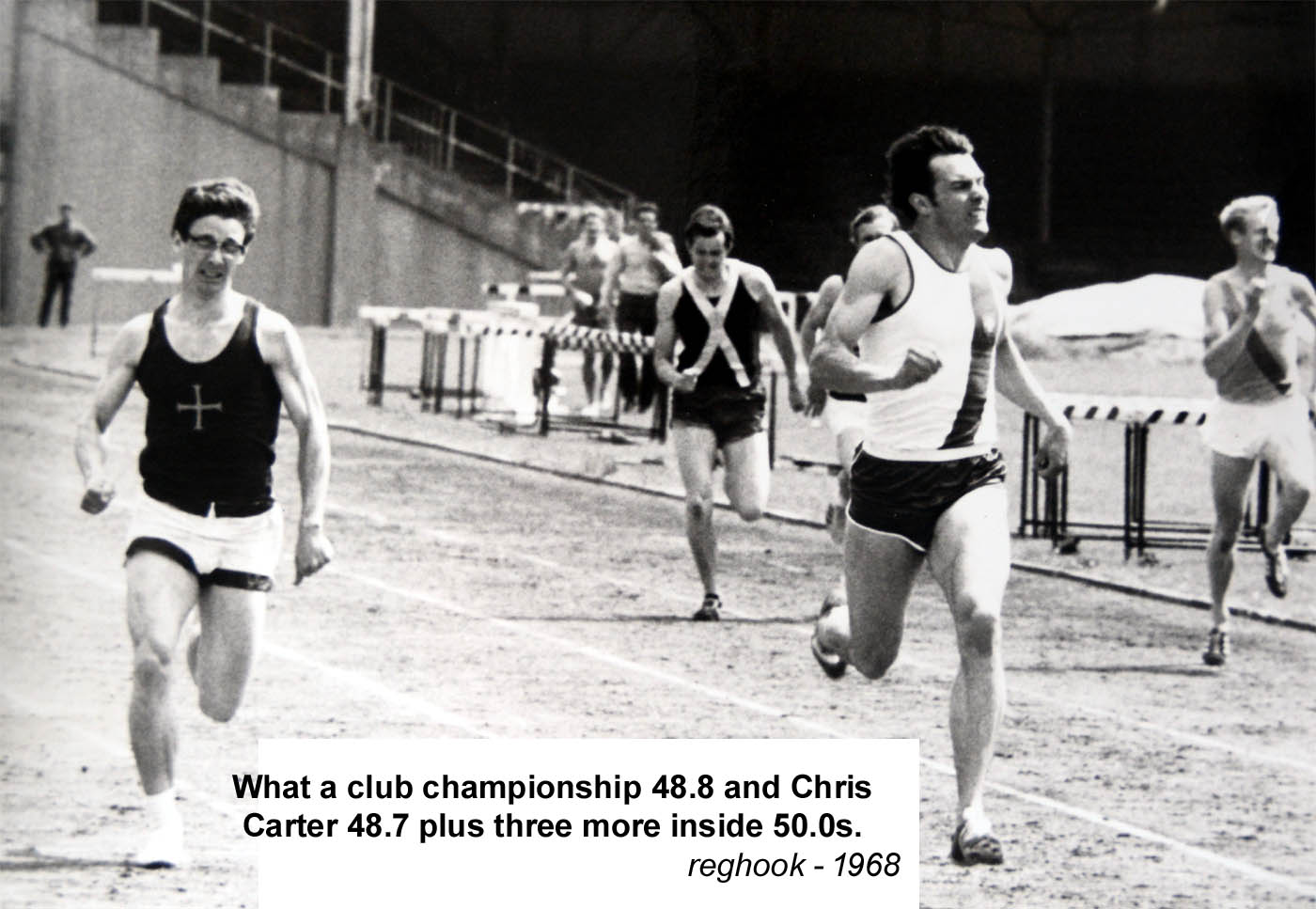
In the SCAAA championships the Crystal Palace in June, he won the 400m hurdles title in 50.8sec. This was to prove his fastest ever time and was the best British time of 1971.
It was also, probably, the fastest time ever by a British hurdler of his height.
In the European Games in Helsinki, he clocked 52.0s in the 400m hurdles but failed to make the final but improved to 51.6s for third place in his final run of the season against West Germany at the Crystal Palace.
In October, David accepted an invitation to take a twelve-month posting to San Francisco as a research chemist.
 “On arrival in San Francisco in Oct 1971, it took me a while to recognize that at that time (or since) there was no local club system as we know it in most of the USA. Eventually, I made some contacts at the West Valley Track Club down towards what is now Silicon Valley and through them met John Hendershot, a staff writer at Track & Field News who was a high hurdler.
"We worked out together quite a bit that winter and he helped me when the season opened to get into several open invitation meets. I ran at the Mount SAC Relays in Los Angeles and Fresno, Bakersfield, and San Jose. It was high standard stuff with many aspiring Olympic athletes tuning up for the US Trials. It soon became evident that with times in the 52-sec range it was not going to be worth my while to return to the UK for our Olympic qualifications.
"In truth, I hadn’t been in an environment to support the training effort required since leaving the UK. I realized how fortunate I had been the previous few years and how much I had benefited from the regular National Hurdles Squad weekends at Crystal Palace under John LeMasurier and George Tymms. My final competitive meeting in California though ended on a high note with a win at the 1972 Pacific Assn Championships at Diablo Valley College, Pleasant Hill, near Oakland, CA. All the Olympic class athletes were elsewhere, so I managed to win in 52.0 for 400mH, which was probably my season-best. Apart from one open and very amateur 400 flat in Houston 9 months later, which nearly killed me, that was my retirement. I was 30 by then and getting busy with other things and had no regrets”.
When David left for work in America, he was top of the British 400m Hurdles lists and although he raced the following year, he was not able to improve on his best.
He was at the top of the tree when there was so much richness on the British scene with the like of David Hemery, Olympic gold medallist and World record holder in 1968, John Sherwood Olympic bronze medallist in 1968, Alan Pascoe who was to become Commonwealth Games Champion and club mate Andy Todd, European bronze medallist.
David’s personal best are. (As his career spanned the end of imperial distance and the introduction of metric distances, I have included both marks.)
60y indoors; 6.51s – 1966. 100y 10.1s – 1963. 100m 10.9s – 1963.
200m 22.3s – 1971. 220y 22.6s – 1966. 400m 47.6s – 1971. 440y 48.5s – 1968.
880y 1:55.2s – 1966 1500m 4.28s – 1967. 110m hur 15.5s – 1970. 120y hur. 15.8s – 1963. 220y hur 24.5s – 1966. 400m hur. 50.8s – 1971. 440y hur. 52.6s – 1966.
High j 5’ 6”/1.68m – 1963. Pole Vault 8’0”/2.44m – 1964. Long J 21’5”/6.54m – 1963. Triple J 42’10”/13.07s – 1963. Shot 29’5¼”/8.97m Discus 102’ 4”/31.19m – 1966. Javelin 141’10”/42.92m – 1969. Decathlon 5930 (old tables) 1966.
Dave married Katherine (Kathy) Arbuthnot in Louisiana March 1979 - Son Chris born in Houston 1981- Son Steven b Houston 1983.
Returned home to Chester, UK Feb 1994 - Jun 1998 - London, UK Jun 1998 - Jun 2002 - Houston, TX Jun 2002 - Apr 2014. Retired from Shell in Houston after 35 years in 2004 -