
It is impossible to say when athletics started in Sussex, as athletic events were held before Tudor times, and during the reign of Henry VIII. However, I have been helped generally by Peter Lovesey’s “Century of the Amateur Athletic Association” and the 1907 Sussex edition of the Victorian History of the Counties of England. This has been very useful although they separated Harriers from athletic clubs.
Later, much later in some cases, several Sussex clubs were named Harriers including Brighton & County, Horsham Blue Star and Worthing & District, but none of those clubs seem to be involved with Hare Coursing.
There were many “Coursing” clubs in small towns and villages and quite a few associated with local squires or big wigs. The Brighton Harriers were formed before 1823 and were believed to be the oldest and largest in the County. These were really the forerunner of the Cross-country clubs, which were to come later.
As a sport “Coursing” gets twice as much coverage in the 1907 History, as Athletics. Some lasted into the second half of the 20th Century and I can remember signing permits for them to hold races, when I was Secretary of the Sussex A.A.A in the late 1950s. Some were also Beagle clubs.
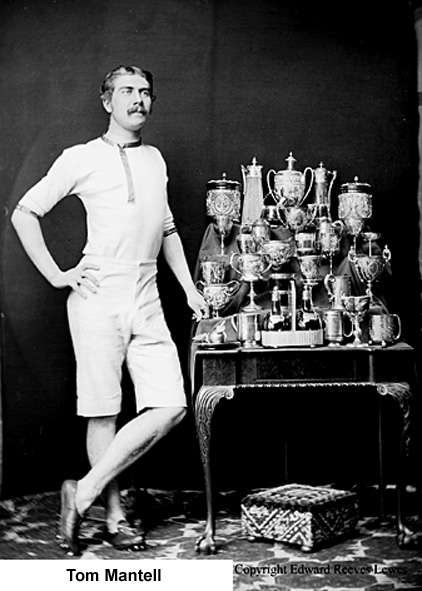
Around 1870 Tom Mantell, a talented runner from Lewes, had many successes in London as well as in Sussex. He was instrumental in forming the first Lewes Athletic in 1880, and promoted many athletic meetings at the Dripping Pan, including visits from Oxford and Cambridge Universities as well as some emerging London Cubs.
He was also a coach and it is reputed that he helped the great W.G. George - who was the best middle distance runner in the World for many years and held the world one-mile record holder - I believe, into the 20th century.
In those days some trophies were very valuable, and it was not unusual for good class club athletes’ to acquire many trophies and prizes, and this continued well into the 20th Century. When Mantell died, without having close descendants, he bequeathed some valuable silver trophies to the Lewes Borough Council, though where they are now remains is a mystery.
The turning point came in 1880 with the formation of the Amateur Athletic Association, which succeeded the Amateur Athletic Club, who did not cover the whole country. They were the first national association in the World and introduced a complete separation from professional competition.
There were however, three categories of athlete, the “professional”, who did not come under the umbrella of the “A.A.As”, the “gentleman amateur” and the “artisan amateur”, who were mechanics and labourers. It even took a little time before the “amateurs” recognised each other, but these descriptions were deleted after a few years. Both the Midlands and Northern Athletic Associations were formed before the A.A.A.
In Sussex, the Brighton Athletic Club, which catered for a whole range of different sports, was not giving good value to athletics as a specific sport. It was not until 1894 that Billy Baker, a more than useful cross-country runner led a split and formed the Brighton & County Harriers, though they were by no means a purely cross-country club. It is the oldest continuous club in the County, subject to a couple of mergers, catering for athletics having survived both World Wars.
There were other clubs in Sussex at the time, primarily to promote yearly meetings and Horsham Blue Star Harriers, sometimes referred to as Horsham A.C. had a meeting on Bank Holiday August Monday in 1871, and Chichester A.C. held their meeting on Whit Monday that continued on and off till the early 1950s. I can remember attending the Sussex Women’s championships at the Priory Grounds in 1958 on Whit Monday, where Brighton's Suzanne Farmer emerged as a top Discus thrower/shot putter. She still holds the Sussex shot put record.
Eastbourne Rovers, including cyclists, held a meeting in August but in 1905 the runners formed Eastbourne A.C. and continued to hold an August meeting.
Crawley A.C. held meetings from 1897 and Hayward’s A.C. from 1888, while Worthing, Hastings, Bexhill, Littlehampton and Cuckfield all held annual meetings but they bore little resemblance to what we would regard as an athletic club today.
THE TWENTIETH CENTURY
I do not have the dates that these clubs folded but they had all gone by WWI and Brighton & County embraced most of the areas around the south centre of the County. Several with “Sections” and many other would be athletes travelled in to get competition and probably companionship.
Around the turn of the century a Slinfold bricklayer from Horsham Blue Star, Alf Shrubb, emerged as a cross-country and distance runner, who could beat all comers as well as setting World Records and becoming the first real Sussex international, more about Shrubb later.
Come 1907, Brighton & County Harrier’s H.S. Stan Pullinger, from Ringmer, ran in the first real International Cross-country championships at Scotstun, placing eighth, and was a member of the winning English team.
1908 saw the first London Olympics Games and the first Sussex Olympian in the person of Brighton Policeman George Larner. Larner had already set World records and won both the 3.5k and 10-mile walks Olympic titles, the only Sussex athlete to win two Olympics title and one of only a few British athletes who have done the double, more about Larner later.
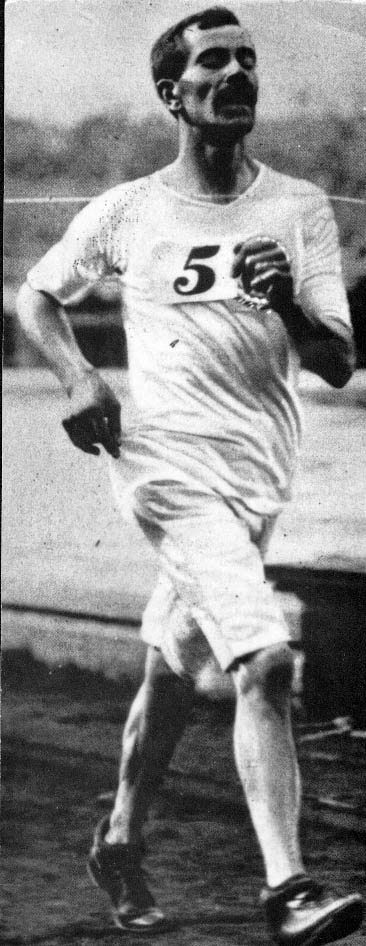 Roll on to the 1912 Olympics in Stockholm and there was another Brighton & County athlete in action. E.J (Ernie) Henley a book keeper from Brighton, who reached the second round of the 400m and the semi-final of the 800m, where he clocked 1:57.7s. Henley also won a bronze medal in the 4 x 400m relay. Henley returned to action after WWI with faster times and some good 1500m runs. He was very involved the running of the Sussex County Amateur Athletic Association, when he retired from running, and was for many years County Treasurer, and later the announcer at championship meetings, which he did until 1949.
THE TWENTIES
The Sussex County Amateur Athletic Association was formed in 1924 with just a handful of clubs, but they did motivate the County to develop and athletics was to move on considerably in the twenties with Ernie Gough, leaving the Brighton Club to re-activate the Horsham Star Harriers, in 1925 with George Etheridge.
Charlie Deardan and a talented distance runner, J (Stanley) Lyon, who was one of the earliest members when the Brighton & County Harriers broke clear of Brighton A.C in1884, turned the Worthing section into the Worthing & District Harriers in 1927. Then in 1928 a group of walkers left the Brighton & County Harriers to set up the Sussex Walking and Athletic club and soon produced a couple of useful athletes
At the Amsterdam Olympics in 1928, Brighton & County’s A.J (Arthur) Muggeridge, who had moved on to Polytechnic, finished fifth in the 10,000 in 31:31.8s.
The Sussex Women also set up their County Association although, apart from the Brighton Ladies A.C, there were only relatively small pockets of Women’s or Ladies athletics taking place in the County, apart from at Brighton's Preston Park and a few “Open Handicap” meetings.
There was a talented middle distance runner, Lilian Styles from East Littlehampton, who was of national standard at 880 yards and cross-country, and who was able to mix it with the best in the Country
THE THIRTIES
In the thirties a promising young walker, Bert Collard (Brighton & County) won the National Junior Road Walking championships (Junior by standard not age) and looked set for great things. Unfortunately a serious road accident put paid to that, and he was left with a damaged leg that ruled out any sport.
He did stay in athletics however becoming a well-respected and qualified walking judge and time keeper.
In 1937 Eric Weir - a Brighton & Hove Grammar school boy from Hassocks, who was at Cambridge University - not only won the Sussex senior Cross-country title but went on to become the first ever Sussex winner of the individual title at the Inter-county cross-country championships.
For the top track performers the final years of the thirties were a little uncertain, as it was in the whole country, as the Olympics were due to be the held in Tokyo (deja vu!).
Lancashire’s Sandy Duncan (Achilles) had been teaching in Sussex for several years, and qualified for Sussex and had won several County sprint titles as well as the shot put and long jump. He had also set several county records and such was his status nationally that he was almost a shoo in for the team. Another sprinter Richard (Dickie) Webb, of Brighton & County, was doing practice with the sprint/relay squad, while Bexhill’s Marathon Runner, Cecil Ballard, was also in the frame.
A modern building for the Bexhill Amateur Athletic Club was built opposite Bexhill Down and this catered for several sports apart from athletics, but I am not sure whether the building was opened just before or at the end of the War.
WWII put paid to the Olympics and it would be another 24 years before Tokyo would host the Games.
THE WAR YEARS
To the best of my knowledge only the Brighton & County Harriers and the Worthing & District Harriers managed to keep going throughout the War.
My family home became the headquarters of Brighton & County Harriers, a venue for a group of youngsters including a very young and polite fair-haired Hugh Foord, who came and joined the club as soon as he was 14 years old while many pre-war members would call when they were home on leave and go for a cross-county run over Hollingbury, knowing that a tin bath of hot water would be ready when they came back.
Over at Worthing resident George Hogsflesh, who was the Assistant Secretary of the A.A.A. (the paid officer) and Landscape Gardener Bill Hughes, who, after the War built and ran the first proper cinder track at the Hove Greyhound Stadium, kept the Worthing Club ticking over, and there were many races between the two clubs, usually over the Country at Sompting.
Derek Wells (Worthing), and later Malcolm Inns (Brighton) were the highly promising athletes and they had many battles over the Country with the slightly older Wells winning most of the encounters, though Inns did win one Sussex Youths (u16) cross-country title at the end of the war. Inns was to become the Brighton & County secretary in 1952. 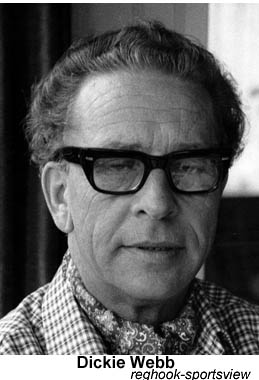
The County Association moved things along with the Sussex Senior Cross Country championships on the first Saturday of 1946, I believe at Denne Park, Horsham, where Cecil Ballard, who had now joined Surrey A.C. won the second of his three titles and Horsham won the team race.
The first Senior Track championships after the War was held at its home at Preston Park, Brighton, where there was a permanent grass track. Several of the 1939 medallists, including 220 yards champion, Dickie Webb, came back to defend their titles though un-successfully.
I believe the Sussex Women’s Championships did not recommence until 1947, as they were a separate association.
In 1949 the major events were held at the new Sussex Athletics Stadium and cinder track at Hove Greyhound Stadium. With the Southern Athletic Championships and the National Police championships also being held there before the end of the decade there were some quality athletes on show.
The ladies held their championships separately and Elsie Baker had left Brighton and gone to Selsonia and won several titles. She took up coaching and was to be the first W.A.A.A. head coach but that was in the 1950s. The Sussex Women’s Championships was to remain nomadic for a few years.
Having reached 1950 I am going to take a breather here, but would appeal to anyone who can put me right on anything to please contact me at reghook@ntlworld.com so we can amend or maybe add something. I would certainly like more information about the women’s athletics in the thirties and forties.
A lot of this has come by word of mouth over the years and my memory, which is eighty plus years old and may sometimes be suspect!
I will be starting the second half of the 20th Century in a few weeks and would also like help with the vast amount of information there is to cover. Not minor club stuff but the information about the top Sussex athletes.
Watch out for next week “The first Super Star of Sussex Athletics”.