
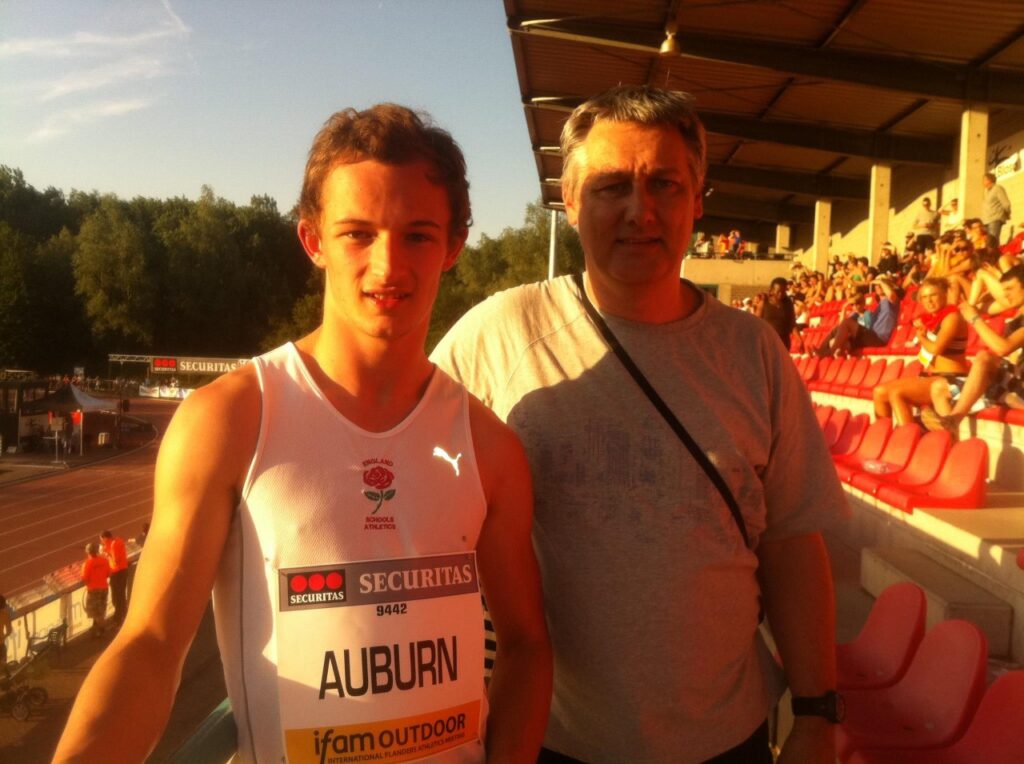
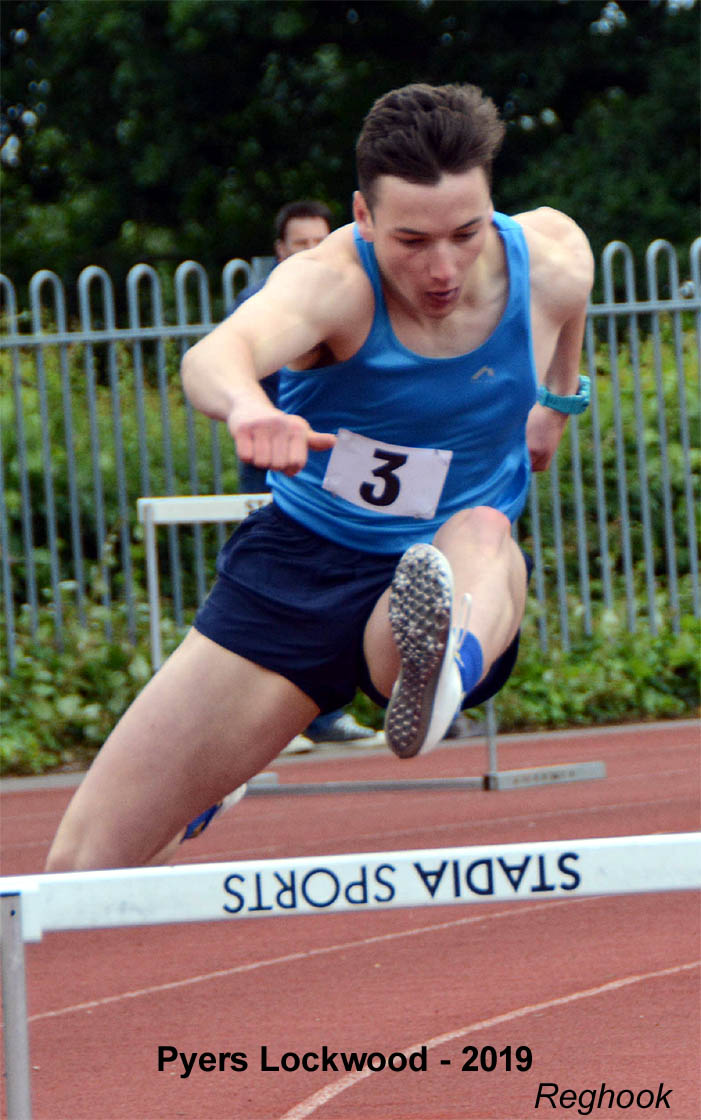
For Trevor Simcox, coaching athletics combines a passion for teaching with a love of his favourite sport. Based at Brighton and Lewes, he coaches some of the counties best young hurdlers, including Pyers Lockwood (ranked 3rd in the country U20 400mH), Lucy Kirby (10th U17 300mH) and Seb Wallace (12th for U17 60mH). There’s not much he doesn’t relish about his role and he can’t wait for everything to get back to normal. Kate Matthews caught up with Trevor for a chat about his coaching.
Kate: Who are you?
Trevor: Trevor Simcox. I competed as an athlete for Peterborough AC before the days of the split which led to Nene Valley Harriers. I’m now a speed and jumps coach working in Sussex.

Kate: Which athletes do you and have you coached?
Trevor: I am probably best known for hurdles coaching. When not affected by Covid 19, I coach at Withdean and Lewes tracks but I’m happy to coach anywhere - it’s the coaching I love. I have coached so many athletes over the years, some for a few weeks and some for a decade - the list is too long to put here. I have enjoyed coaching everyone, from my first squad of four U13s through to my current squad of 12 athletes ranging from U15 to V55 ages.
Kate: How long have you been coaching and how did you get into it?
Trevor: I started coaching as part of my PGCE many years ago but drifted through coaching other sports - badminton, squash, football and somehow I had a judo coaching qualification before ending up back in my favourite sport, athletics. The move back to athletics started with my son wanting to do the sport and then was sucked into coaching by John Clements who inspired me to do more. 15 years later I’m still doing it.
Kate: Were you an athlete before a coach, and if so, what distances/disciplines? How does coaching compare to the thrill of being an athlete yourself?

Trevor: I was an athlete while at school and university - I competed in most track and field events but loved the hurdles. Alongside this I played first team rugby at Bath University but both sports dropped away with an ever increasing injury list and the pressures of work and family.
For me, there is a big difference between coaching and competing. The best feeling as an athlete is winning, whether you are competing either as an individual or as part of a team. As a coach, the highs are not necessarily the winning of a race but the demonstration of a skill learnt in training being successfully used in a competitive performance. The thrill of winning is for the athlete - as a coach I am happy to be part of the team that placed them in that position. Having said that, I still experience the excitement of a race and the enjoyment of a win.
Kate: How often do you coach? Types of sessions etc?
Trevor: In normal times I would have 3 track sessions a week with 3 gym or yoga or plyometric sessions for the senior athletes and some of these sessions for the junior ones with a steady progression through - all aiming for long term development with performance targets along the way.
Kate: What are the highs and lows of being a coach?
Trevor: The highs of being a coach are numerous but for me the best ones are in training sessions when an athlete understands an improvement and puts it into action. There are no lows, but some parts are more difficult to manage, particularly the emotional lows following an athlete’s disappointment. These are difficult because there is no one fixed approach that works. It takes time to understand what each athlete needs in order to come out of an emotional low a better athlete and person. Sometimes this can take a while to figure out but it’s worth persevering.
Kate: What is/are your proudest moment(s)?
Trevor: I celebrate every success, be that an athlete winning a medal, gaining a record or pb or simply getting on the track and competing. I do enjoy it when a plan comes together and the results are as expected.
Kate: What have been the hardest moments?
Trevor: As a coach - none. As an athlete it was achieving English Schools entry standard for 400H and not being selected for the county team. It was hard to accept the decision from a group of people that, from an athlete’s point of view, did not connect with athletes. Although I understand this connection is very difficult in a volunteer/amateur environment with limited people to run the sport, I still think the ‘management’ team of the sport needs to find a way to have better links with grass root athletes. Although there are high level initiatives trying to achieve this, I would question their success. At present the nominations for the Regional Councils within EA are open. While I agree with the concept of the councils, how many club athletes are aware of this and how many know what impact on the sport these councils have? How many grass root athletes know who the Sussex representative is? Sadly, I don’t have a better alternative so I hope this raises the profile of the work they do.
Kate: How do you motivate your athletes to keep going and focus etc?
Trevor: With the vast majority of athletes I have coached this is not a problem - they have been and are all very self-motivated. The squad trains in all weathers, even doing school work on the way to training. My role is to take that motivation and provide a constant background of support so the athletes can achieve their goal/targets. The last year has been tricky, trying to find ways of providing that overall support, but it just needed a few new approaches to keep us all connected and fit.
Kate: What has coaching athletics brought to your life?
Trevor: I always wanted to be a teacher but after many years as one, I moved to the corporate world and lost this aspect of my life. Coaching sports was the closest to teaching so I took that up in my spare time. As I progressed in corporate life, the 2 aspects blended together and I began to use many of the skills needed in coaching/teaching in my business life.
Kate: Has coaching changed over the years?
Trevor: In the speed world one big change was the impact that Tony Hadley had on the speed coach community. While he was running the NCDP, there was a change from many isolated coaches working by themselves or in small groups to a much wider national and international co-operational team of coaches. Without this program, I would have struggled and probably given up athletics’ coaching. This momentum of cooperation is still being held together by the regional support of Mike Leonard but every year I feel like the support for coaches from our NGB is struggling. I acknowledge this has not been helped by the difficult last 12 months and I hope our new coaching leader will pick up on coach support in the next Olympic cycle.
Kate: What are the main difficulties that face you and your athletes in normal times?
Trevor: Most of my athletes are limited to training in the evenings and as hurdlers, getting access to sufficient track space to run over competition heights and distances is very difficult. In winter most sprint and hurdle groups would benefit from an indoor track but being based in Sussex on the south coast there are none within a feasible distance for training. This limits the type of training we can do and restricts the progress of the athletes.
Kate: What have been the main difficulties facing you and your athletes during Covid19? How have you overcome these? Is it getting harder to manage the more lockdowns we face?
Trevor: The main difficulty has been gaining access to a track and hurdles. As sprinters and hurdlers, a track is key. Hurdling on soggy grass allows limited work over the hurdles. At present we are focusing on getting in physical shape to be able to hurdle once the restrictions are lifted.
Kate: Would you encourage others to become coaches and why?
Trevor: I would encourage everyone to think about becoming a coach but before doing so, to understand why you want to become a coach and how the coaching you want to do fits in with the overall athlete development for those you are about to coach. We need more people in all roles in the sport - if coaching isn’t for you, then there are lots of other ways to support the athletes. Just try it and see what happens.
Kate: How could the world of athletics be improved for both athletes and coaches?
Trevor: For the majority of people not directly looking at athletics every day it only appears on their radar for World Championships or Olympics. To help the sport, it needs to be more visible to a wider audience. There are many people thinking of ways to do this but the key is finding a competition format that is sustainable, inclusive and exciting. I am in support of any initiative that tries to achieve this.