
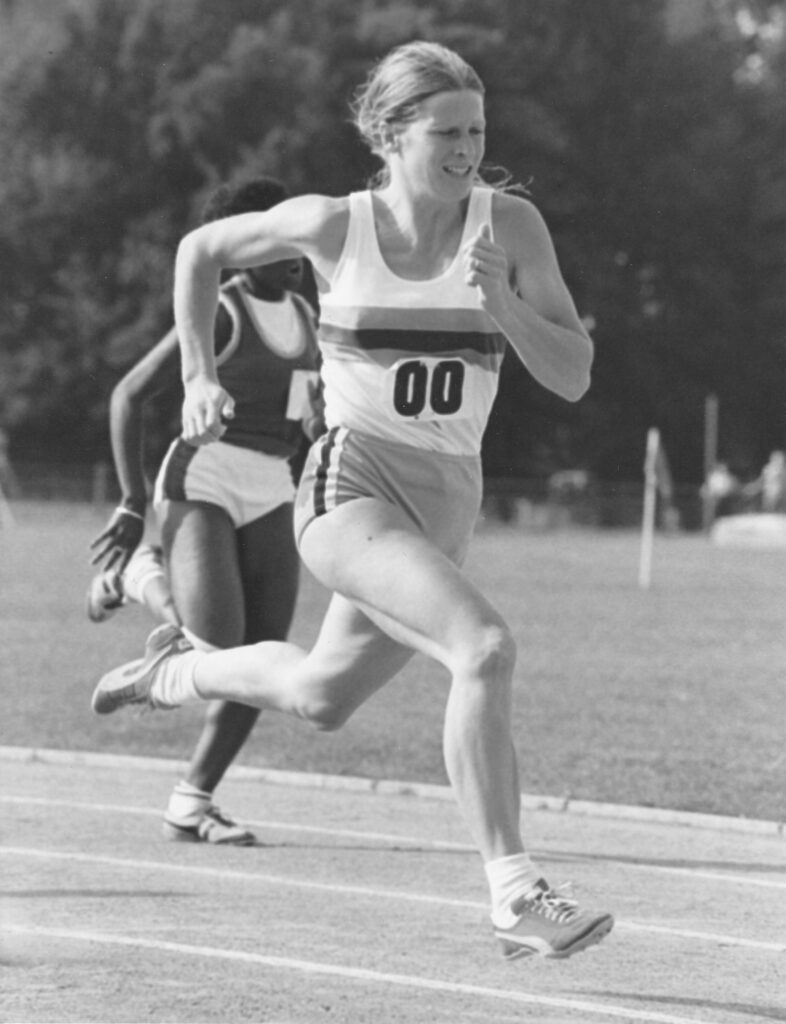
Sue Keen is one of the county’s top sprint coaches and it’s easy to see why. With a wealth of experience behind her, both from when she was an athlete (she still features on the all-time rankings) as well as having coached a huge number of successful Sussex athletes over many years, she is dedicated to the sport and a true county asset.
Kate Matthews caught up with the Eastbourne Rovers legend to have a chat about coaching and how her and her athletes are dealing with Covid19.
Kate: Who are you? 
Sue: I am a Level 4 Performance coach and coaching co-ordinator at Eastbourne Rovers Athletic Club. As a schoolgirl I competed for Bedford and County AC before moving to Eastbourne to attend Chelsea PE College in 1972 when I joined the local club.
Kate: Which athletes do you and have you coached?
Sue: Over the years I have coached mainly sprinters of all ages but have also had multi event groups and hurdlers. My first notable group of athletes emerged in 1996/7 with Jon Groenen, Chris Legate, Jamie McFetters , and Will Parsons winning gold medals in 400, 200, and 100 at the Sussex Championships. Jon went on to come 4th at English Schools breaking 50secs for U17 400m. Since then others from my squad have had English Schools success.
At the moment I have a mixed group of 12 athletes with age ranges from 15 to 21 plus one masters. I am fortunate in that they are all very dedicated to their training and are therefore gaining excellent results as seen in the 2019 Sussex Rankings:
Bailey Wright- 1st Sen 100m
Bryn Smith -2nd Sen 100m
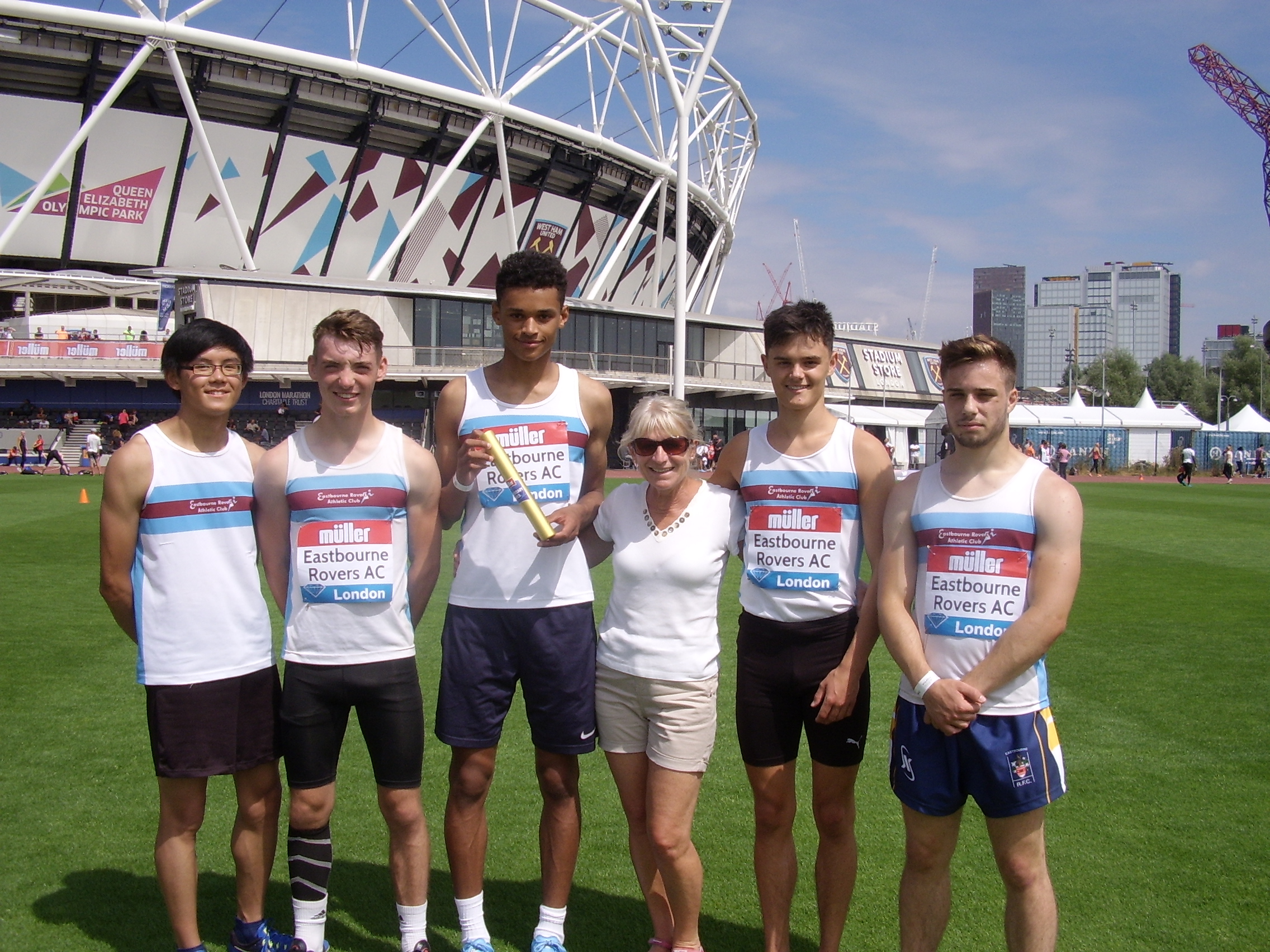
Moyo Sargent -1st U20 400m
Shania Martlew – 2nd U20 100m
Kyla Francis - 3rd U15 300m
Plus, other medals from County and Schools events.
Kate: How long have you been coaching and how did you get into it?
Sue: I started self-coaching when I was at College and others from the club joined me. Gradually as my own performance standard declined after having children, I found I got just as much pleasure from seeing others improve their performances as competing myself. I therefore took all my coaching exams to offer the best coaching I could.
Kate: Were you an athlete before a coach, and if so, what distances/disciplines? How does coaching compare to the thrill of being an athlete yourself?
Sue: I was an athlete myself competing in the sprints with my main success coming from 400m. I competed for Eastbourne Rovers in all the Women’s Leagues and was the captain for many years. I gained success at regional level and held the Sussex 400m record of 56.2 secs in 1980 (I am still amused to see my name still on the all-time list!).
 As I said earlier, I coached myself, but I was fortunate to attend some 400m squad days at Crystal Palace with Mike Smith (coach to Roger Black). Years later he was my mentor when taking my Senior Coach award.
As a vet I went to the European Championships in Hungary - where I got to the final of the 400m. I also went to the European Indoors in Belgium.
As being a coach has now taken precedence over competing, I stay closer to home and am happy competing in the Sussex League, but can now only manage 100m and 200m!
I always enjoyed competing both for myself at English Schools, Regional and National events but also covering the sprints, 400m hurdles and both relays at a league match! Once I knew personal bests were not on the cards anymore, I put my energy into getting others to hopefully enjoy the sport as much as I have. I get a lot of satisfaction from seeing an U15 develop into a mature athlete and from seeing athletes of all ability make improvements from my input.
Kate: How often do you coach?
Sue: I coach track sessions on Tuesdays and Thursdays and at the weekend it varies from hills at the moment and track sessions later in the year. The athletes do Strength and Conditioning which I arrange for them at different venues.
My athletes follow a double periodised year programme to prepare for both indoor and outdoor competition. I change the mesocycles every month. There are 2 sessions on offer each evening to cover work required by both 100/200m and 300/400m athletes. A typical session in October was 4x (3x100m @ 70% with jog back recovery) 4 mins between sets or 4x (run 300m, walk 100m, run 100m @ 70% ) 4 min walk back recovery. Each month sessions are varied to keep interest and motivation.
I keep a record of my sessions so as the athletes mature so the sessions can change. Improvements can be made if necessary and I continue to research to keep up with new ideas and the athlete’s feedback from courses and experiences they have had.
Kate: What are the highs and lows of being a coach?
Sue: The highs outway the lows. When you see the coaching come to fruition as athletes improve and reach their goals. The lows are like the situation at the moment when it is really difficult to plan and keep everyone motivated when they cannot get to a track and the evenings are darker and they have missed out on events such as BUCS and English Schools.
Kate: What have been your proudest moment(s)?
Sue: International success. Starting with when Bailey was selected to run in the relay at the Welsh International for England South in 2018. This was followed the next year with Moyo captaining the England U18 team at the Youth Nations Cup in Ireland, competing in the 400m and 4x400m. Bryn Smith thrilled us as he took the silver in the 200m at BUCS and represented the British Universities at the Loughborough International. I was also very proud of my sprinters when our U20 boys’ team was selected to run at the Anniversary games where they came 4th (The U17 girls’ team was also selected).
Just last week Moyo and Bailey heard they had been selected to attend the UK Junior Talent Squad for National and Regional squad days which should have started at the end of this month! So again, I am very proud of them both.

Kate: What have been the hardest moments?
Sue: During the last lockdown and since it has been hard to know what and when there would be any competitions and so what to focus on. Also dealing with injuries in the lead up to major competitions.
Kate: How do you motivate your athletes to keep going and focus etc?
Sue: I would like to think I am motivated myself and pass this on to my athletes. I help my athletes set realistic short- and long-term goals to reach their full potential. I enjoy making sessions interesting and varied. As the athletes mature, we discuss the planning of their year to keep them involved.
Kate: What has coaching athletics brought to your life?
Sue: I love coaching athletics and seeing my athletes competing is the reward for all the wet windy evenings spent at the track. It is a hobby that keeps me active.
Through my coaching experience I have gained positions such as ‘Head Coach ‘for the Sussex Partnership and delivered sprint workshops in the Southern region. It also enabled me to finish my teaching career as Senior Lecturer of Athletics at Brighton University (My perfect job!).
I have made many friends and it is lovely to see the athletes grow up and now bring their children to the track!
Kate: Has coaching changed over the years?

Sue : When I first started coaching in Eastbourne, I was the only coach and covered everything. As the club has grown and facilities improved so has coach education. More parents and past and present athletes have got involved but never enough to cover all the age groups and events especially the field events. The club used to cater for U15 up to Senior but now there are coaching groups for U11 through to Vets.
I think at the ‘Coaching Assistant’ and ‘Club Coach ‘Level there are always opportunities to take courses and attend additional training days. The higher levels still get left behind every time the coaching system is revised i.e. there are fewer courses – need to travel, courses cancelled- so there is no incentive to move to a higher level.
Kate: What are the main difficulties that face you and your athletes in normal times?
Sue: In the normal athletic climate, the difficulty for myself and my athletes is selecting which competitions to target and those to miss.
There are so many opportunities now with age leagues, open meetings and area competitions, but it is not possible to peak at them all. The skill is peaking at the right time.
The cost of travelling and staying away for weekends is difficult for some.
Kate: What have been the main difficulties facing you and your athletes during Covid19, and how have you overcome these?
Sue: Since COVID-19 we have had the opposite problem in that there were so few competitions it was sometimes difficult to know when they were and apply before entries were full. Leading up to the summer made planning difficult to ensure athletes were prepared. Bailey Wright was invited to the South of England Senior championships and took silver in the 100m. Others managed to get a few runs locally. Thanks also to the Martin Etchells’ Memorial Meeting.
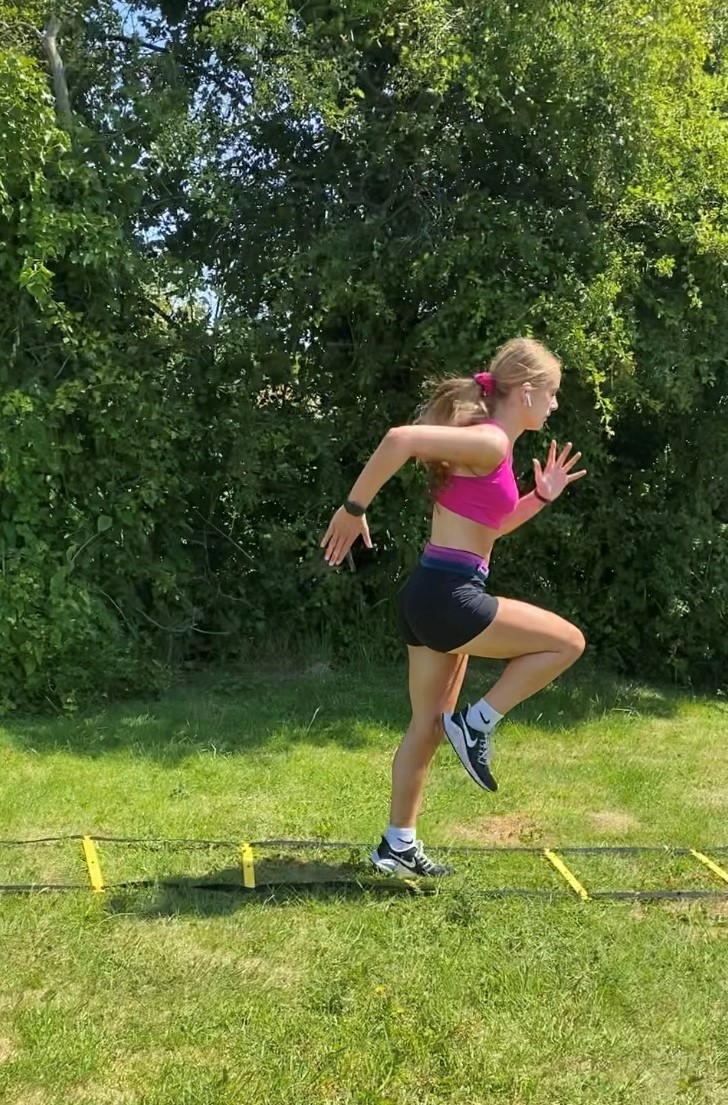
Eastbourne did not get access to the track until the end of July. To keep athletes motivated I set circuits they could do at home in the garden, along with running schedules to do in the local park. When we were able to, we met in small groups which worked well with the lovely summer we had.

Kate: Would you encourage others to become coaches and why?
Sue: I would encourage others to become coaches as it is very fulfilling seeing athletes develop and improve. As past athletes you can give something back to our sport and all clubs are desperate for volunteer coaches.
As a parent or teacher to become expert in one discipline is often easier and coaching field events especially can be very rewarding.
Kate: How could the world of athletics be improved for both athletes and coaches?
Sue: Improve drug testing and ban all drug cheats so all athletes are on an equal footing.
Encourage more female coaches to take on senior groups and positions dealing with elite athletes.
Put on more local courses for all levels of coaches to make it easier to attend even if it means smaller groups.