
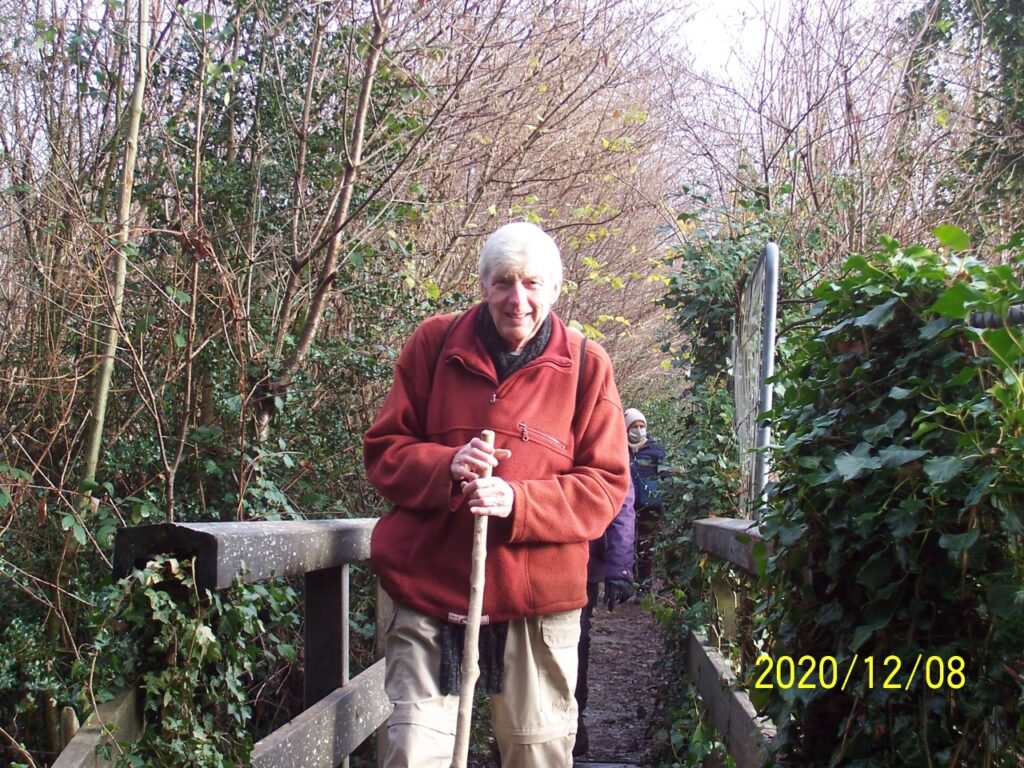
Every now and again in the world of athletics you come across people who have competed in the sport as youngsters, have gone on to coach and on top of this volunteer at a county level. Lester Medcalf is one of these. A former English schools medallist who has coached at East Grinstead AC since the 1990s and is a top jumps’ official for Sussex. Kate Matthews caught up with Lester for a chat about coaching and how he is dealing with Covid19.
Kate: Who are you?
Lester: My name is Lester Medcalf and I am now 75 years old. I have been with East Grinstead AC since the early 1990s.
A bit of background. My mum and dad were both from the East End of London and we moved to Southend-on-Sea in 1948 when I was about 3 – mum and dad bought and worked in a back street grocery shop in Southend.
Dad had played football at a good amateur level before WW2 and mum was a keen encourager of sport. Bank holiday Mondays were normally spent at the White City. I am told that after one of the meetings I hop, step and jumped all the way home from the train station – I have no memory of that.
I went to school in Southend and in particular at Southend High School for Boys after 11 plus. I took to athletics, as well as football and cricket, and went to the English Schools Championships at Shrewsbury in 1960 in the junior boys triple jump for Essex. I broke the English schools record with my fifth jump (12.85 metres) only for the other Essex jumper to jump further with his fifth jump, and then a Cheshire lad went even further with his last jump. My last jump went a long way but it was a no jump – I should have moved my marker back a little bit. So, I finished third. While I was a member of Southend AC most of my coaching and training went on at school with Rex Tregunna looking after me. He really thought I should be concentrating on 440 yards.
(I also went to the 1960 Rome Olympics with my mum and dad.)
I then went to the English Schools in 1962 at Hull for the intermediate boys triple jump, but I had more or less given up athletics by then and I came nowhere. I didn’t do any athletics, let alone coaching, after I left school, but I did play park football regularly until 1985.
I got married in 1975 and we lived in Southend until 1985 when we moved to East Grinstead. We had 3 sons, all born in Southend, and my life changed in about 1992 when our eldest son asked if he could go to the local East Grinstead Athletics Club. I used to go and watch him at the training and eventually somebody came up and asked me if I’d like to help rake a sand-pit at training.
I am also heavily involved with East Grinstead Town football club – taking gate money for most home matches as well as tidying up the ground after matches.
Kate: Which athletes do you and have you coached?
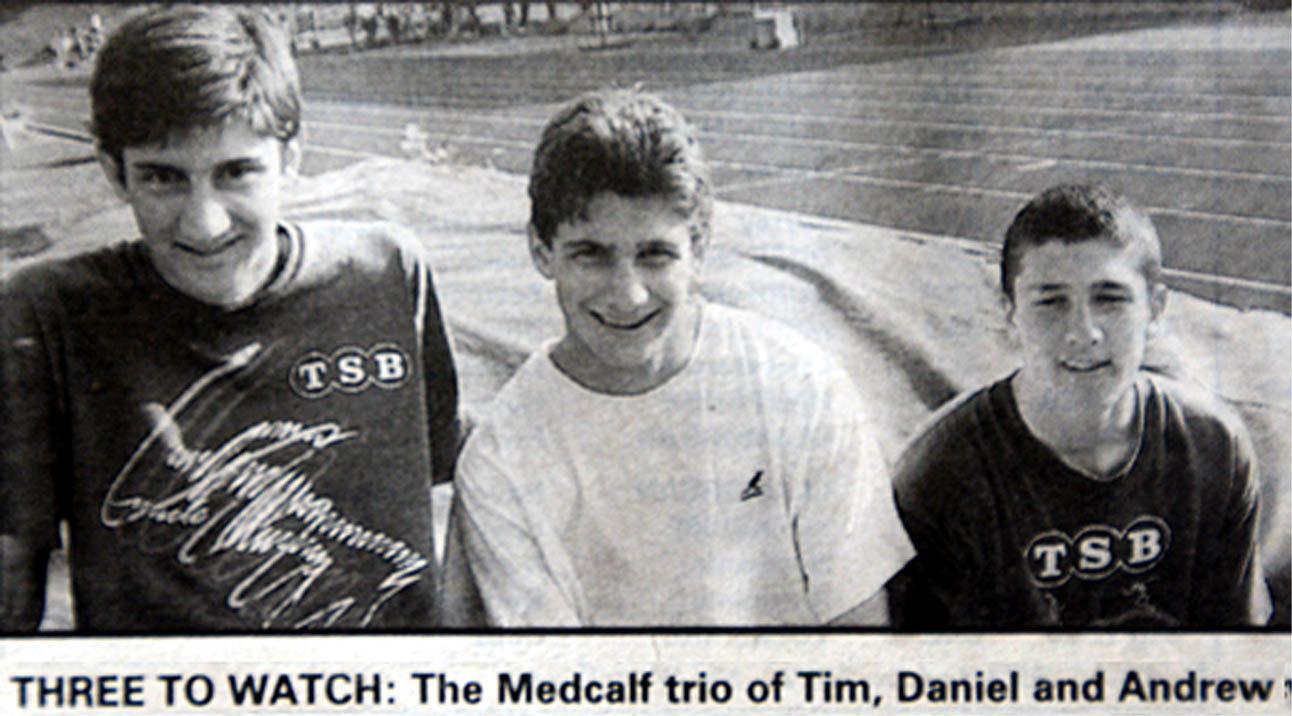
Lester: All 3 of my sons joined East Grinstead and all went to the English Schools in due course. Two of them in the triple jump (and I obviously had some involvement in that). My youngest son Andrew was second in the junior boys TJ in 1997 with 12.83 metres (2 centimetres less than my jump in 1960). He also came second in the All England U17 Champs in 1999 with 13.70 metres. My oldest son Timothy eventually had a best of 14.11 metres as a senior although by then he was being coached by John Vernon at Sutton.

I have tended to coach under 13 athletes at East Grinstead in a range of events as they start their athletics life. Tom Sandys I remember long-jumping over 5 metres as an under 13. Much more recently I have helped Abby Beswick who went to the English Schools 3 times – and in 3 different events. Hurdles, 100 metres and long jump though Paul McKeown was her coach by then. I was pleased to be able to measure her current long jump PB of 5.65 metres in a league match in Bournemouth a couple of years ago.
And I should mention a couple of East Grinstead athletes from a few years ago who enjoyed their athletics without quite knowing which was their best event. We showed them how to triple jump and they took to it with reasonable PBs – Laura McGarty 10.73 metres and Tessa Martin 10.52 metres.
And in 2019 I helped Rebekah Tyler get ready for the English Schools intermediate girls shot putt where she finished seventh.
Kate: How long have you been coaching and how did you get into it?
Lester: As above answers how I got into it. I still coach (and I also still judge as you know) because I still enjoy it and because people helped me when I was doing my various sports and by coaching it’s a way of paying them back for their help.
Kate: How often do you coach?
Lester: In normal years I coach 3 times a week in the winter – one helping with indoor circuit sessions, one at our outdoor floodlit training facility coaching youngsters and one at one of the East Grinstead parks which has some good hills. The outdoor sessions will often be extended so that I can spend some time with our older horizontal jumpers.
In the summer it tends to be 2 sessions, both at our outdoor facility, with the younger athletes and then with our older jumpers. Many weekends are of course spent at various meetings – I go to all our different age-group matches.
Kate: What are the highs and lows of being a coach?
Lester: Highs are seeing East Grinstead athletes doing PBs, especially when they have done something that we worked on in training. Lows are when the athletes forget to do what we worked on in training. Other lows are when capable athletes leave the sport (which is what I did 60 years ago).
Kate: What is/are your proudest moment(s)?
Lester: As a coach (and as a dad) I can’t ignore my own sons’ achievements. Otherwise I go back to PBs – and especially any unexpected PBs – from any of my athletes.
Kate: What have been the hardest moments?
Lester: I’ve never coached an athlete who has been to the Olympics or World Champs. And only one or two who I thought might win medals at National Championships. But there have been some who ought to have won County Championships and didn’t – and who know they should have done better. Getting them going again can be hard (as I assume it can be if they should have won an Olympics medal – but didn’t).
Kate: How do you motivate your athletes to keep going and focus etc?
Lester: Not sure I have any magic formula. Use examples of other athletes – especially if they are known to the athletes - who have been through a bad spell.
Kate: What has coaching athletics brought to your life?
Lester: It has helped to keep me in touch with younger people, it has helped me to keep fit and introduced me to lots of people I would otherwise never have known.
Kate: Has coaching changed over the years?
Lester: In my 25 years or so as a coach the biggest thing is I think the use of technology – videos of your athletes training/competing to show then what they are doing or what they are not doing. Having said that I am a reluctant user of this sort of technology.
Kate: What are the main difficulties that face you and your athletes in normal times?
Lester: Adequacy of the facilities we use for training. The facilities that we use at Imberhorne School are not looked after as well as we would like.
At a personal level getting old is a difficulty that I face – I can no longer demonstrate the middle phase (or indeed any phase) of a triple jump. And cold, wintry and wet days and nights out in the open seem to be more uncomfortable than they used to be.
Kate: What have been the main difficulties facing you and your athletes during Covid19, and how have you overcome these?
Lester: As a club we didn’t arrange any training until early July last year when, once a week, we used a local park for running and for exercises – but no facilities for throwing and jumping.
We were able to use our normal training facility only during October (but stopped in November and again now). As I suggested above the facility we use had not been looked after.
Have we overcome the Covid difficulties? As a club not really. Have I as an individual? NO.
Kate: Would you encourage others to become coaches and why?
Lester: Certainly YES because, both as a club and more widely, we are short of coaches in particular (and, like many other organisations, we are short of all sorts of helpers to make things run).
Whatever the abilities of your athletes seeing them progress is why you do it.
Kate: How could the world of athletics be improved for both athletes and coaches?
Lester: As above more helpers would be great. More indoor facilities in this part of the world for those cold winter nights would also help.